Creating a Homeschool Schedule That Works for Your Family
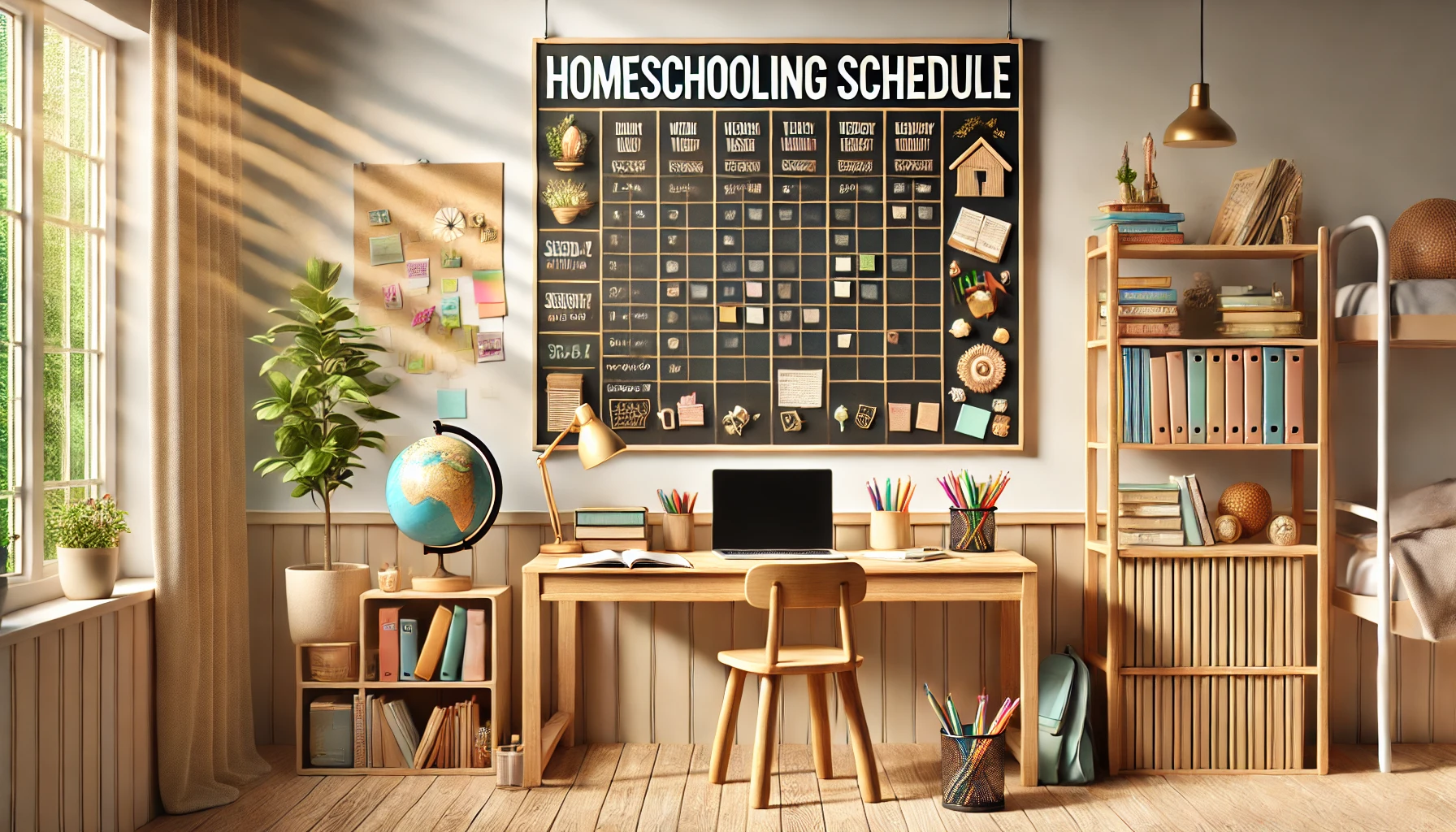
"What should our daily schedule look like?"
Unlike traditional school, homeschooling gives you full control over your routine. You don’t have to follow a 7:45 - 3:30 bell system. Instead, you can build a flexible schedule that fits your child’s learning pace, your family rhythm, and even your lifestyle.
In this post, we’ll explore how to create a homeschool schedule that’s simple, adaptable, and stress-free.
1. Choose a Daily Rhythm or Routine
Instead of a strict hourly schedule, many homeschoolers prefer a rhythm, a flexible order of activities that repeats each day.Sample Daily Rhythm
Morning
➧ Breakfast, chores, read-aloud
Mid-Morning
➧ Math + Language Arts
Late Morning
➧ Snack + Science or Social Studies
Afternoon
➧ Free time, nature walk, creative play
Evening
➧ Reading, games, family time
2. Pick a Weekly Structure That Suits You
There’s no rule that says you must homeschool Monday through Friday. Try different models.5-Day Week
➧ Traditional setup with each day having core subjects
4-Day Week
➧ Monday - Thursday academics
➧ Friday for field trips, projects, or rest
Loop Schedule
➧ Instead of assigning subjects to specific days, rotate through them in a loop.
➧ If something is skipped one day, it just comes up next.
Loop = Science → Art → Geography → Music
➧ Each day, do the next one in line after your core subjects.
Block Schedule
➧ Focus on just 1-2 subjects per day for deeper study
➧ Monday = Math & History
➧ Tuesday = Reading & Science
3. Understand How Much Time You Really Need
Homeschooling is usually much faster than traditional school. Why? Because you’re teaching 1-on-1, without classroom transitions, distractions, or busywork.General Daily Time Guidelines
Preschool-K
➧ 30 minutes - 1.5 hours
Grades 1-3
➧ 2 - 3 hours
Grades 4-6
➧ 3 - 4 hours
Middle | High School
➧ 4 - 6 hours
Remember Learning includes more than workbooks! Reading aloud, cooking, gardening, building, and playing are all valuable learning moments.
4. Balance Core and Enrichment Subjects
Make sure your schedule reflects a balance between "must-do" core subjects and "fun" extras.Core Subjects
➧ Math
➧ Reading & Writing
➧ Science
➧ History | Social Studies
Enrichment
➧ Art
➧ Music
➧ PE | Movement
➧ Foreign Language
➧ Life Skills
➧ cooking, budgeting, gardening
Tip
Don’t try to do everything every day. Rotate!
5. Include Breaks and Downtime
Kids (and adults!) need time to recharge. Build regular breaks into your routine to prevent burnout.Sample Schedule with Breaks
9:00 - 9:30
➧ Morning circle time / read-aloud
9:30 - 10:15
➧ Math
10:15 - 10:30
➧ Snack & stretch
10:30 - 11:15
➧ Language Arts
11:15 - 12:00
➧ Science or History
12:00 - 1:00
➧ Lunch + free play
1:00 - 2:00
➧ Art, project work, or quiet reading
Final Thoughts
A homeschool schedule is meant to serve your family - not stress you out. It should feel like a rhythm that gives structure and space to grow. And it can change as your seasons change.
There’s no perfect homeschool schedule - only the one that helps your child thrive.Read ☛ “Socialization in Homeschooling: Busting the Myth & Finding Community” We’ll explore how homeschooled kids build friendships and social skills in real-life settings.
About Blossomings
Blossomings is an educational platform dedicated to providing high-quality
English learning materials, worksheets, and structured lessons for learners worldwide.
Our goal is to make learning English simple, engaging, and accessible for everyone.