Organizing Your Homeschool Space
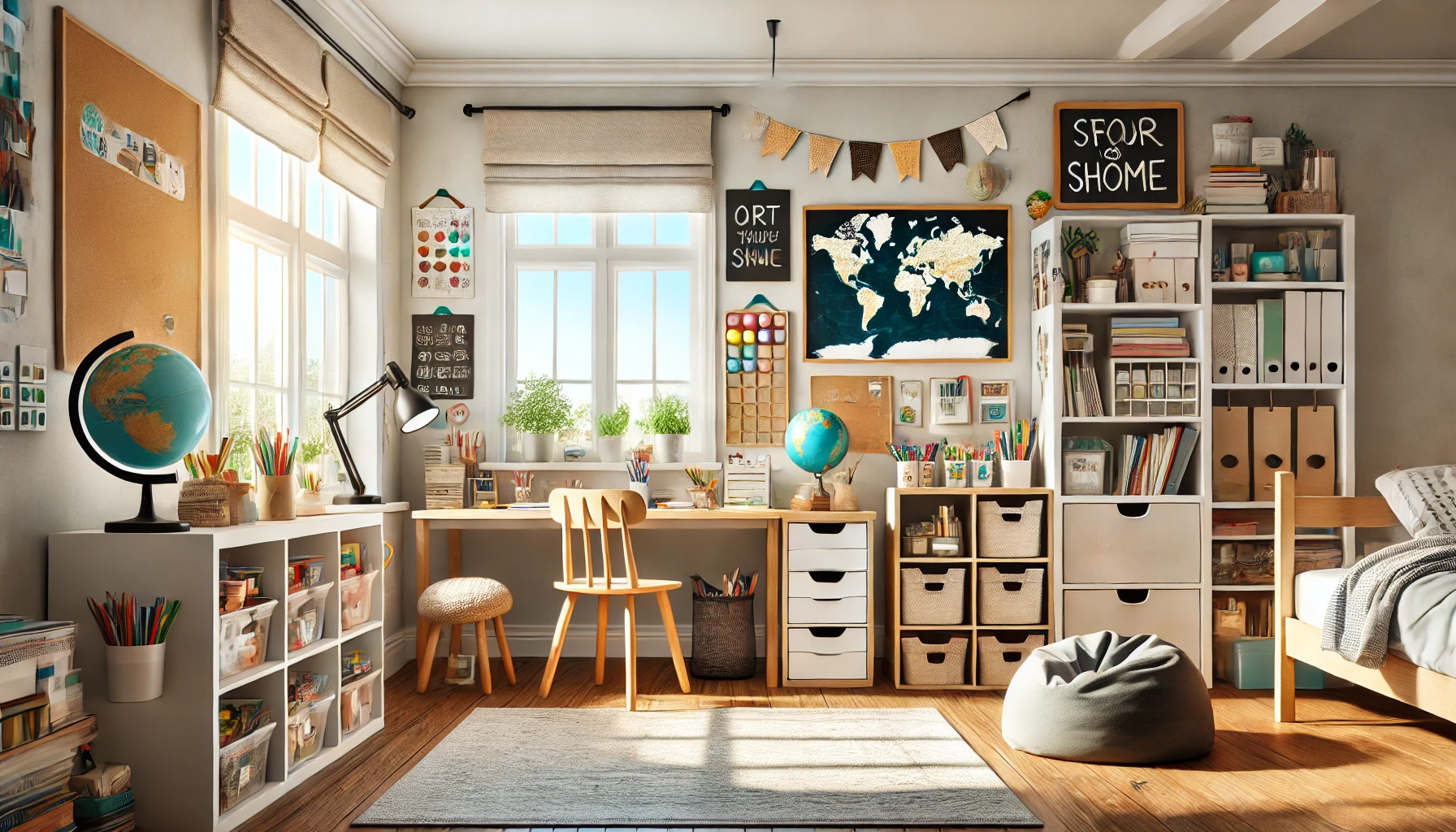
Simple Setups That Work
You don’t need a big house or a fancy homeschool room to have a successful homeschool. Whether you're working from a dining table, a corner of the living room, or a spare room, the key is creating a learning-friendly environment that works for your family.
In this post, we’ll explore how to organize your homeschool space with tips for every budget, home size, and style.Do You Need a Dedicated Homeschool Room?
Not at all. Many homeschoolers use shared family spaces like the kitchen, living room, or a bedroom corner. The goal is to create an environment where your child can focus, explore, and feel comfortable.“We do school at the kitchen table, and store everything in a rolling cart. It’s simple, but it works perfectly for us.”
➧ Rita, homeschooling mom of 3
1. Gather the Essentials
You don’t need to buy a lot of stuff to get started. Focus on basic tools you’ll use daily.Must-Haves
➧ Table or desk
➧ or floor space with a clipboard!
➧ Comfortable chairs
➧ Good lighting
➧ Writing supplies
➧ pencils
➧ crayons
➧ markers
➧ Storage
➧ shelves
➧ bins
➧ baskets
➧ or drawers
➧ Books and curriculum materials
Optional Extras
➧ Whiteboard or chalkboard
➧ Globe or wall maps
➧ Laptop or tablet
➧ Printer and paper
➧ Educational posters
2. Create Easy-to-Reach Storage
Keeping supplies organized helps kids be independent and keeps your space clutter-free.Budget-Friendly Storage Ideas!
Rolling carts
➧ Perfect for small spaces - roll it out in the morning, tuck it away later.
Bookshelves
➧ Use bins or magazine holders to sort subjects or kids.
Plastic drawers
➧ Assign one drawer per subject or child.
Shoe organizers
➧ Hang over a door to store flashcards, supplies, or small books.
Tip
➧ Keep daily-use items at child level so they can grab them without help.
3. Set Up Learning Zones
You don’t need a big room, just a few defined spaces for different types of learning.Example Zones
Reading Corner
➧ Cozy chair + basket of books
Writing Spot
➧ Desk or table with writing tools
Creative Area
➧ Craft supplies + open space
Nature | Science Table
➧ Rocks, leaves, plants, magnifying glass
Even a few baskets or mats on the floor can signal a new activity.
4. Decorate With Purpose
Make your space feel warm and inspiring, not like a classroom, unless that’s what you prefer.Ideas
➧ Display your child’s artwork
➧ Hang inspirational quotes or scriptures
➧ Use a simple calendar or weather chart
➧ Include maps, timelines, or nature posters
“We rotate art on a clip string, each kid gets to show off their newest creation!”
➧ Emma, unschooling mom
5. Keep It Flexible and Cozy
Your homeschool space should work for your routine, not look like a Pinterest board.Tips
➧ Use lap desks or clipboards for learning on the couch or porch
➧ Let kids read in a beanbag or build with blocks on the rug
➧ Move outside on sunny days - “school” can happen anywhere!
“Some days we read under a tree. Other days we build forts and do math inside. That’s homeschooling freedom!”
➧ Omar, homeschool dad
No Extra Room? No Problem.
If you don’t have a separate homeschool room, try these space-saving tricksSmart Solutions
➧ Use a hall closet or kitchen cabinet for supply storage
➧ Keep a portable bin for each child’s materials
➧ Store books in baskets by the couch or bed
➧ Use vertical space - shelves, pegboards, or wall pockets
“We store everything in a big tote and bring it out when it’s time to learn. At night, it slides under the table.”
➧ Farah, minimalist homeschooler
Final Thought
You don’t need a perfect space - just one that’s peaceful, practical, and personal. What matters most is creating a spot where your child feels safe, supported, and inspired to learn.
Whether it's a full room or a corner of your kitchen, your homeschool space should work for you.Read ☛ “How to Choose a Homeschool Curriculum That Fits Your Family” We’ll break down curriculum types, what to look for, and how to avoid decision overwhelm.
About Blossomings
Blossomings is an educational platform dedicated to providing high-quality
English learning materials, worksheets, and structured lessons for learners worldwide.
Our goal is to make learning English simple, engaging, and accessible for everyone.