Noun Phrase
➧ People like to have money.
➧ I am tired.
Premodifiers
Determiners➧ Those houses are very expensive.
Quantifiers
➧ I've lived in a lot of houses.
Numbers
➧ My brother owns two houses.
Adjectives
➧ I love old houses.
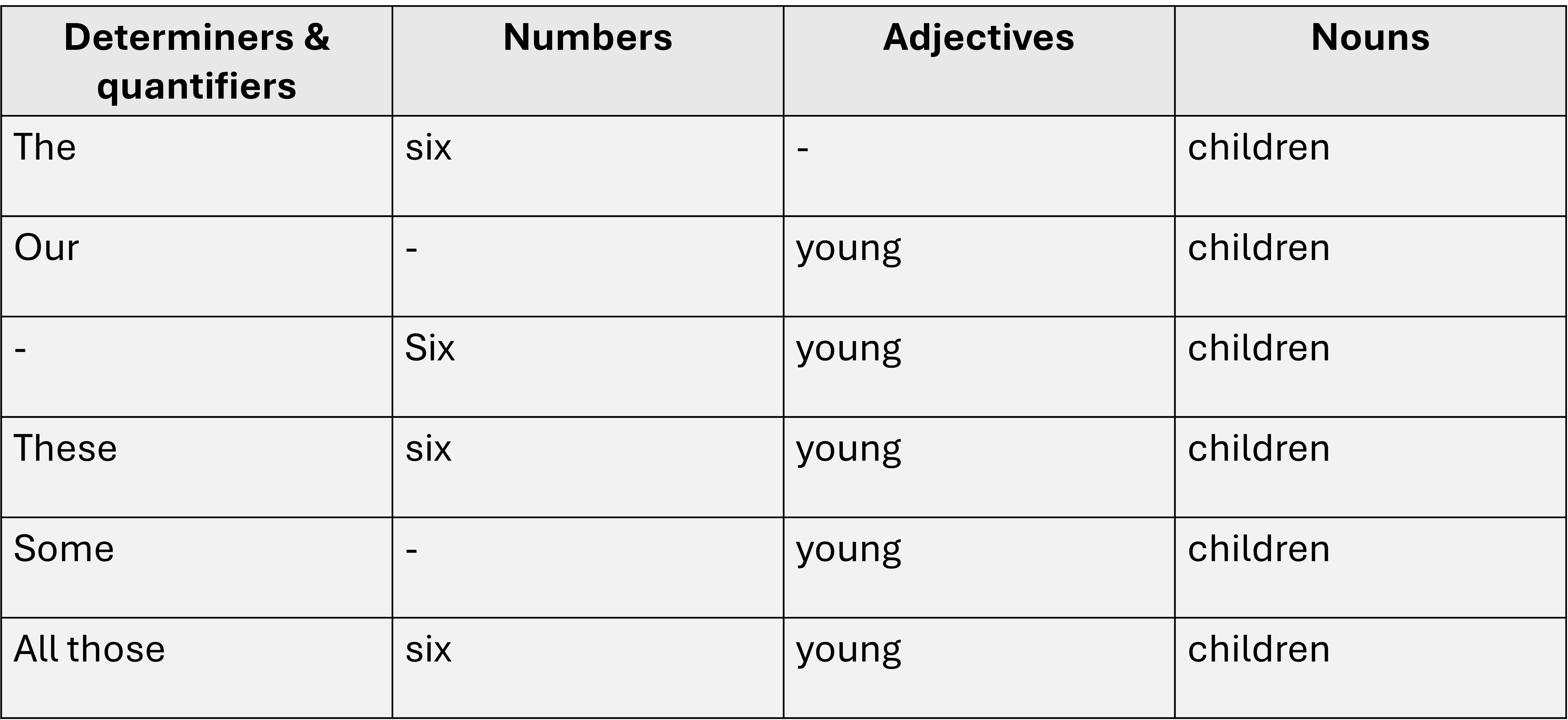
These parts of the noun phrase are called premodifiers because they go before the noun.
determiners and quantifiers → numbers → adjectives → nouns
Postmodifiers
Other parts of a noun phrase go after the noun.These are called postmodifiers.
Postmodifiers can be
➧ a man with a gun
➧ the boy in the blue shirt
➧ the house on the corner
➧ the man standing over there
➧ the boy talking to Angela
➧ the house that Jack built
➧ the woman who discovered radium
➧ an eight-year-old boy who attempted to rob a sweet shop
➧ He's still very fit, in spite of the fact that he's over eighty.
➧ She got the idea that people didn't like her.
➧ There was a suggestion that the children should be sent home.
➧ I've got no decent shoes to wear.
➧ You should take something to read.
➧ I need somewhere to sleep.
➧ an eight-year old boy with a gun who tried to rob a sweet shop
➧ that girl over there in a green dress drinking a Coke
More Lessons ➧ Here
About Blossomings
Blossomings is an educational platform dedicated to providing high-quality
learning materials, worksheets, and structured lessons for learners worldwide.
Our goal is to make learning simple, engaging, and accessible for everyone.